
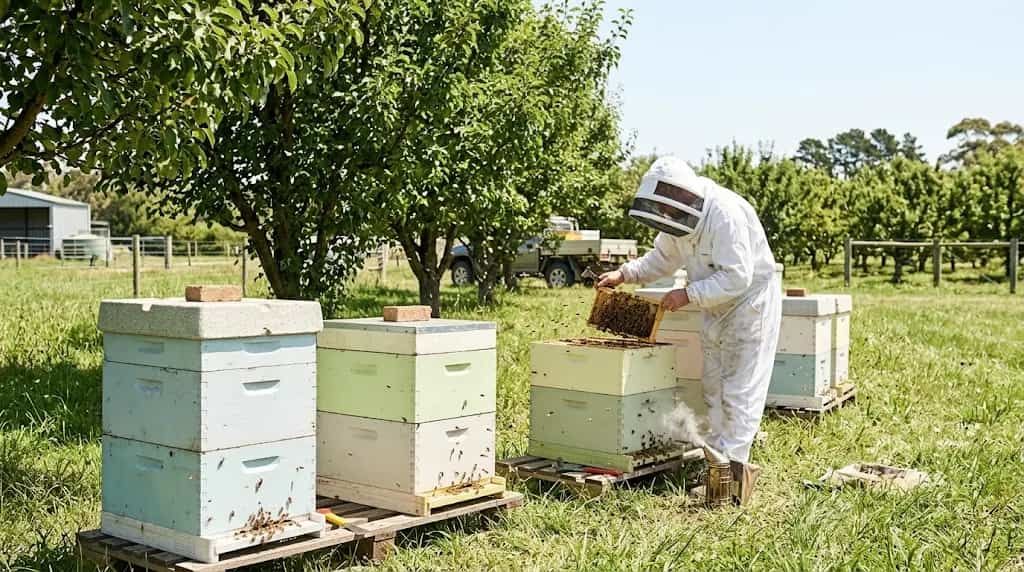
Common EPS hive setup mistakes include choosing a poor hive location, overlooking ventilation and water access, buying equipment without checking compatibility, and assuming insulation removes the need for active hive management. A HiveIQ EPS Hive can provide an insulated foundation for your colony, but getting the initial setup right is just as important as choosing the hive itself.
Key Takeaways
-
Choose your permanent hive location carefully before introducing bees.
-
Make sure frames, boxes and other components are compatible with your hive system.
-
Don't assume an insulated hive can manage temperature and moisture without beekeeper oversight.
-
Give bees convenient access to a reliable water source.
-
Start with essential equipment and learn good hive management before expanding your setup.
Mistake 1: Choosing the Hive Location as an Afterthought
Where you place your hive affects both your bees and how easily you can manage them.
Before setting up, consider:
-
Sun and shade throughout the day
-
Protection from extreme weather
-
Drainage around the hive
-
Easy access for inspections
-
Nearby pedestrian or neighbour activity
-
A suitable flight path for bees
Moving an established colony is more complicated than positioning an empty hive, so it's worth planning the location properly from the beginning.
Mistake 2: Assuming Insulation Does All the Work
One of the main reasons beekeepers choose EPS is its thermal insulation. However, better insulation doesn't mean the hive can simply be left alone.
Bees still require appropriate ventilation, sufficient space, water and regular inspections. Conditions inside the hive can change with colony size, weather and the season.
Think of insulation as helping the colony maintain its environment rather than replacing normal beekeeping practices.
Mistake 3: Mixing Incompatible Hive Components
New beekeepers sometimes purchase hive equipment piece by piece without first checking whether the components work together.
Frames, boxes, bases, lids and harvesting equipment should suit the hive configuration you're building. Staying within a compatible system can make future expansion considerably easier.
Our wider Beekeeping Supplies range can help you build out your setup as your colony and experience grow.
Mistake 4: Forgetting About Water and Seasonal Conditions
Bees need access to water, particularly during warm weather. Ideally, establish a suitable water source before your colony arrives so bees are less likely to seek water from neighbouring properties.
Your setup should also account for seasonal changes. Summer heat, winter temperatures, wind and rainfall can all affect how you position and manage the hive.
The insulation of an EPS hive helps moderate temperature changes, but good seasonal management remains essential.
Mistake 5: Buying Too Much Equipment Too Soon
It's easy to assume that starting beekeeping requires every accessory available.
In reality, beginners should focus first on the essentials:
-
A suitable hive and frames
-
Protective clothing
-
Gloves
-
Smoker
-
Hive tool
-
Appropriate bees
-
Basic monitoring and management equipment
Honey harvesting equipment becomes relevant as your colony establishes itself and eventually produces surplus honey.
If you already know you want a compatible system from hive establishment through to harvesting, the Hive to Harvest Package combines a HiveIQ hive, frames and Micro Honey Harvester in one setup.
Mistake 6: Focusing on Honey Before Learning Hive Management
Producing your own honey may be the reason you became interested in beekeeping, but the first objective should be establishing and maintaining a healthy colony.
Learn how to conduct inspections, recognise normal colony behaviour, monitor pests and disease, and understand seasonal changes before focusing heavily on honey yield.
For hands-on support, Beekeeper Mentoring can help new beekeepers build practical knowledge and confidence around hive management.
Start Your EPS Hive on the Right Foundation
An EPS hive can provide excellent insulation and a lightweight modern setup, but successful beekeeping still comes down to thoughtful preparation and ongoing colony management. Getting the location, equipment and basic management practices right from the beginning gives you a much stronger foundation as you gain experience.
Explore our shop for HiveIQ equipment and other beekeeping essentials for your setup.